
Home / Buying guide
Mulebuy buying guide: verify the lettering before the parcel leaves
A seller mock-up, a warehouse photo and the garment in your parcel are different kinds of evidence. Follow the purchase in order, with particular attention to the exact print, its orientation and the size you selected.
Illustrated archive: these screens document Mulebuy’s earlier buying flow. They do not confirm current operation, prices, return terms or route availability. Verify the service and its terms before sending money or identity documents.
1. Find the original seller link
Search for the product or paste its seller URL into the agent search field. Keep the original Taobao, Tmall or Weidian link with your notes: an agent-wrapped link or a screenshot alone may not identify the exact listing. If a link fails to import, ask the verified support channel whether manual ordering is available instead of selecting a similar-looking item.
Keep the seller image of the exact print, not only the text description. Similar-looking listings can use different characters, orientations or print placements.
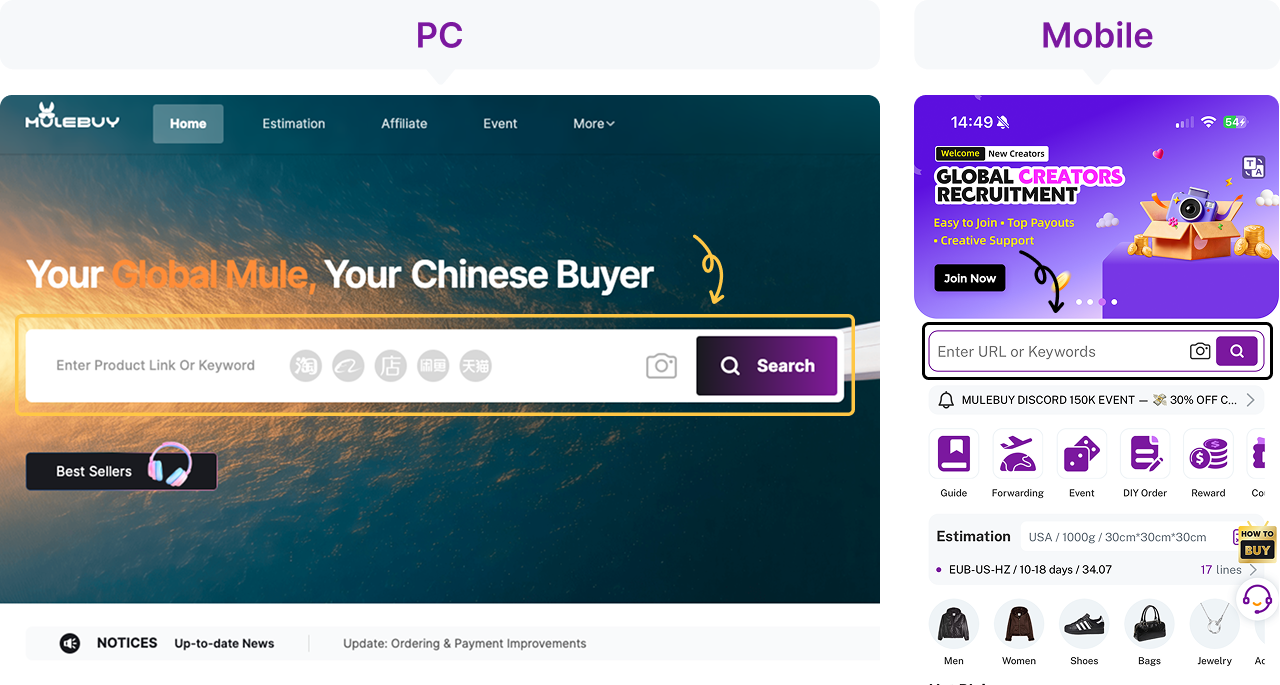
2. Choose the exact variant and make the first payment
Check colour, size, quantity, measurements and seller notes before adding the item to the cart. Review the order quote for goods, domestic delivery and any disclosed service charges. A wallet top-up is not necessarily an order payment; confirm the order itself shows the expected status. International parcel freight is a later decision.
Confirm that the colour and size variant also carries the intended lettering. Put a specific print requirement in the order notes rather than relying on the main thumbnail.
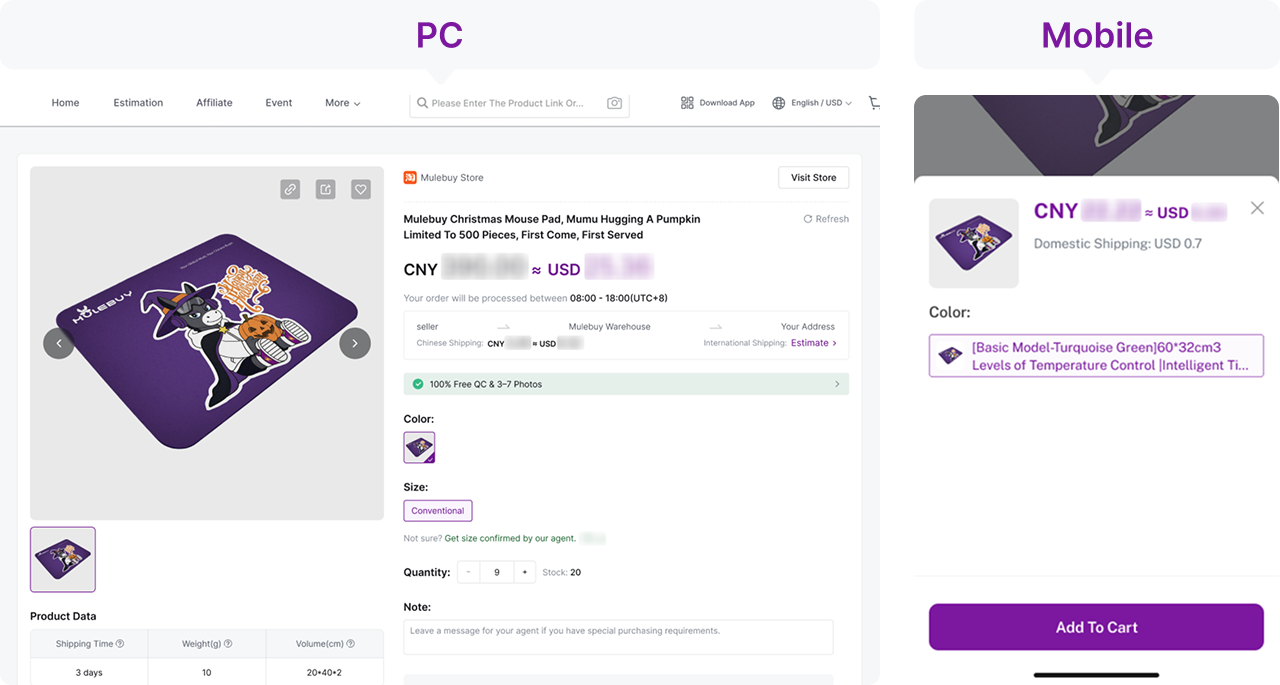
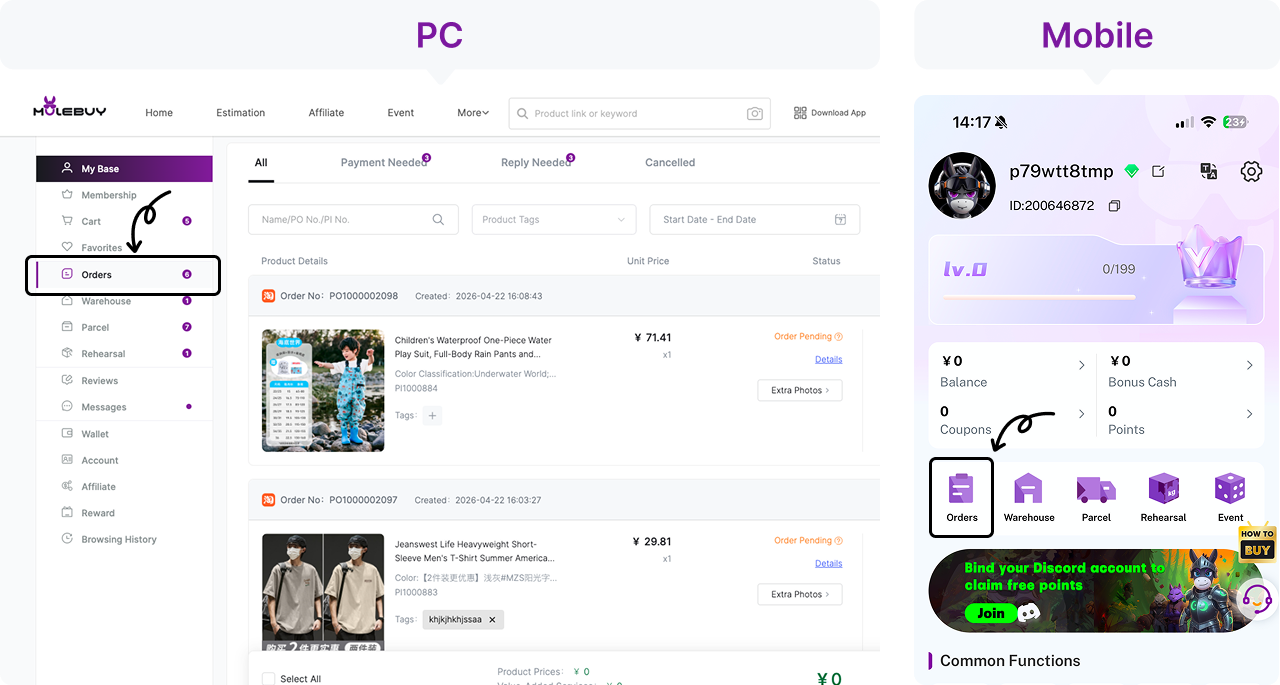
3. Follow the purchase and domestic delivery
Open the order record and distinguish waiting for payment, agent purchasing, seller dispatch and warehouse arrival. Reply promptly if the agent requests a price difference or a missing option. Domestic tracking follows the seller-to-warehouse leg; it is not proof that the international parcel has shipped. Save the order identifier when asking for help.
If the seller offers a substitute, compare the writing again. A replacement with the same garment colour can still change the phrase or script.
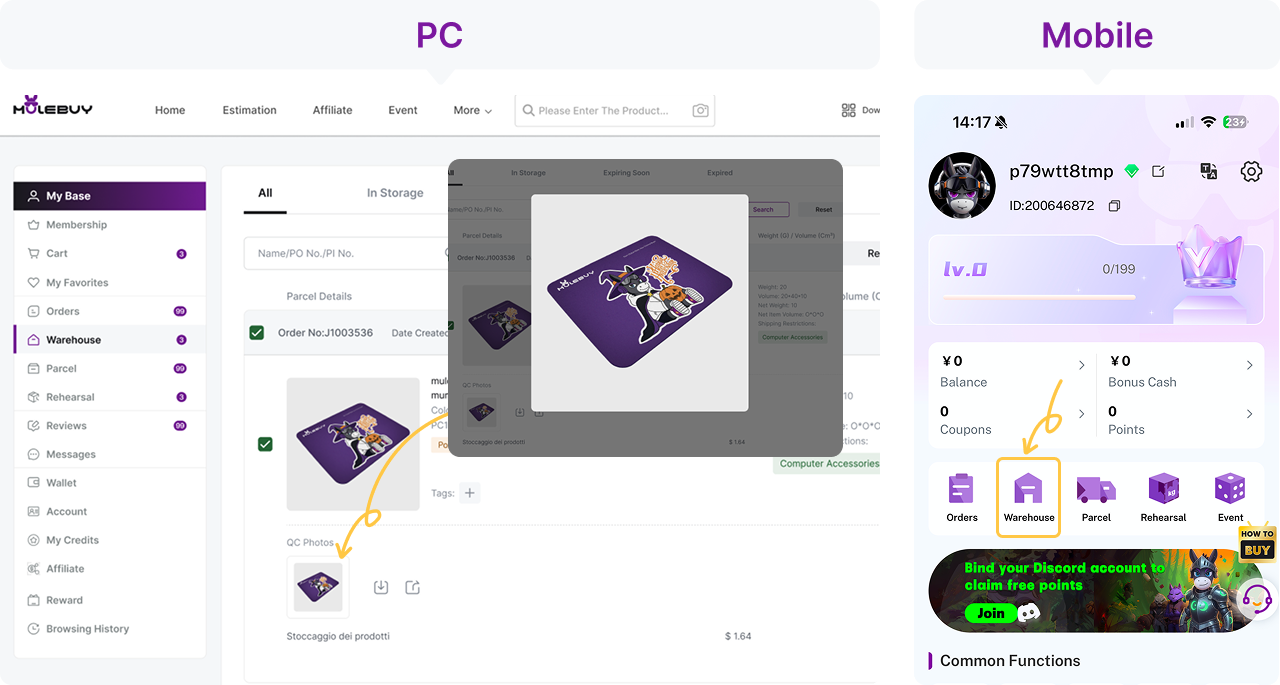
4. Inspect warehouse QC before deciding to ship
Compare the received item with your saved variant, then open the full-size photos. Check visible colour, labels, measurements, print and damage relevant to the purchase. Request a specific additional angle or ruler measurement when the default photos cannot answer your question. QC photographs are visual evidence, not authentication, a laboratory test or proof of durability. Ask about seller return conditions before the applicable deadline.
Request a flat, straight-on view of the complete phrase and a close-up of unclear strokes. Compare the saved mock-up with the actual garment before deciding whether it is a camera reversal or a different print.
5. Build the parcel and review international freight
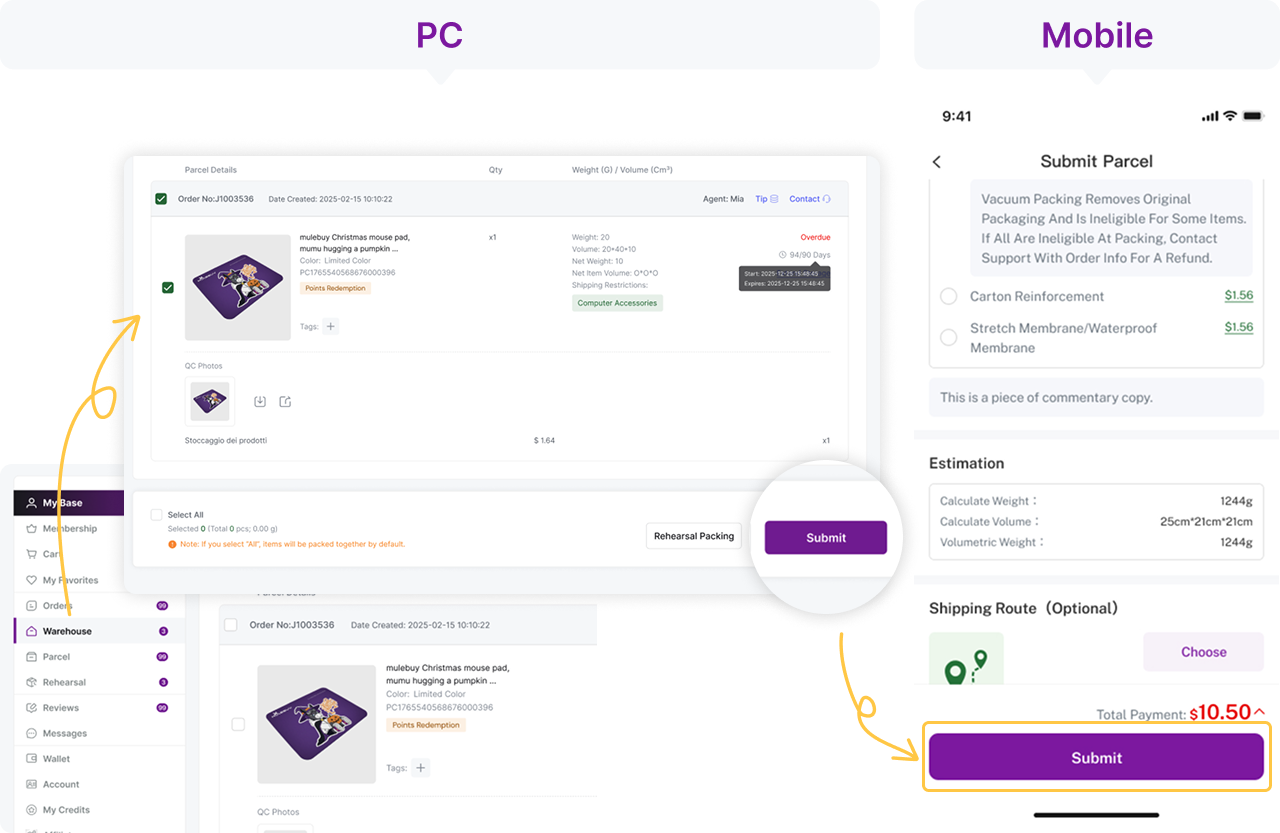
Select eligible warehouse items, destination and packing preferences. Rehearsal or pre-calculation may help establish packed dimensions and weight where offered. Compare the available route, chargeable weight, restrictions, selected services and any applicable import costs before paying. Keep protective packaging that the product needs; a lighter parcel is not useful if it arrives damaged.
Keep a print-related question open until it is answered; do not submit the garment for international shipping while still seeking an exchange for the wrong text.
6. Track the parcel from its own record
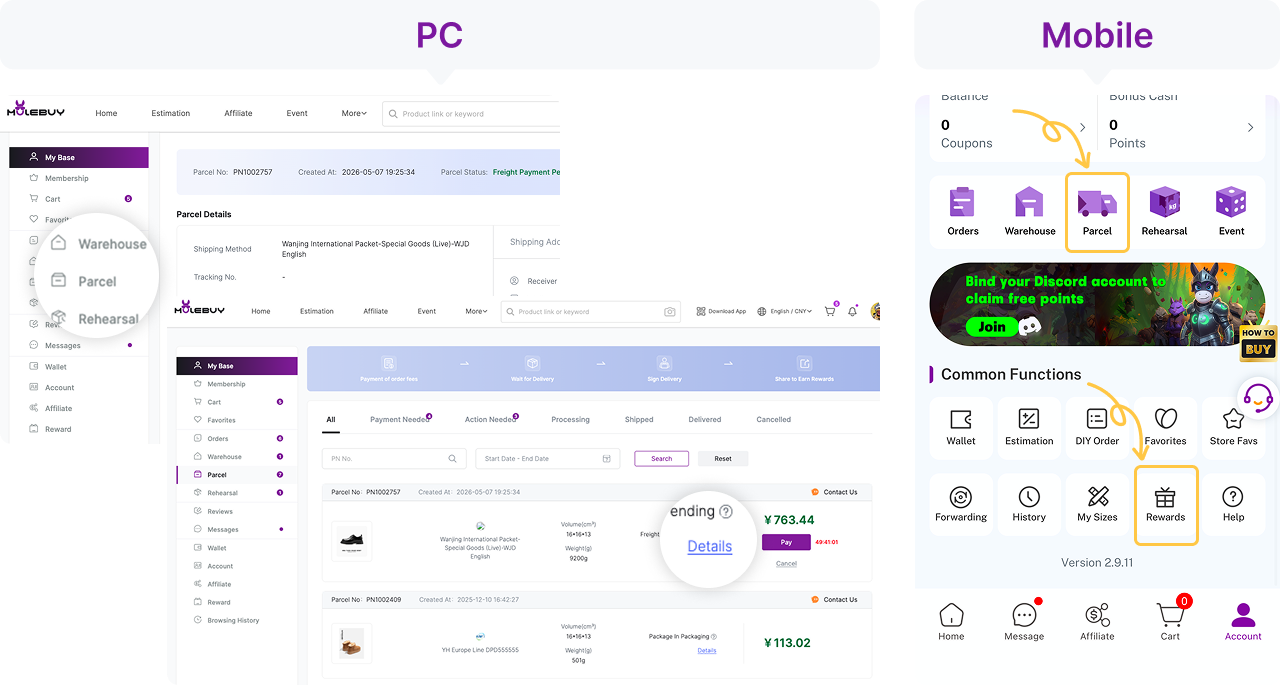
Open the parcel details after submitting it and confirm freight payment and dispatch status. Save the international tracking number and check the carrier events. A parcel record can exist before it is paid or handed to the carrier. If there is a problem, provide the parcel identifier and relevant event to the support channel responsible for that stage.
On arrival, compare the garment with the retained QC photo and order variant. Photograph a visible difference before wear or washing so that the record describes the item as received.
Worked example: a hoodie with a four-character chest print
Keep the selected colour, size and seller mock-up together. Before purchasing, check the phrase as a whole rather than translating four isolated characters. At the warehouse, request a straight-on photo with the garment unfolded, plus a detail where any stroke is unclear. Compare orientation, character order, print placement and the size label. A photograph cannot establish wash durability or fabric composition. Raise a visible mismatch before international shipment, when a domestic seller return may still be possible under the applicable terms.
- Does the selected variant use the same lettering as the mock-up?
- Is the whole phrase visible and correctly oriented?
- Can you distinguish stylised strokes in a full-size photo?
- Have you separated visible print quality from untested durability claims?
Two payments and a quote to check at each stage
The first payment concerns the goods, domestic delivery and any disclosed services. The later parcel payment concerns international freight and selected packing or other services. A wallet top-up, an order payment and a parcel payment are different records: check which one you completed.
Chargeable weight can depend on actual weight or parcel volume under the selected route’s rules. An early estimate is not a guaranteed final quote. Check current restrictions, insurance terms, warehouse storage conditions and return or exchange deadlines; do not infer them from the figures in these old screens.
Practical questions
Can a mirrored seller image mean the garment is wrong?
It can also be an image-editing or camera issue. Ask for a clear photograph of the actual item before deciding. Compare the character order and shape with the saved variant image.
Can QC confirm the meaning of a phrase?
QC can show the printed characters clearly. Meaning still depends on language and context; ask an appropriate reader when slang, a joke or an unfamiliar expression matters to your purchase.
When should I report a wrong print?
As soon as the warehouse evidence shows it. Identify the order and variant, mark the specific difference and ask the agent about the seller's return or exchange terms before the parcel is shipped internationally.
Decision points for the whole order
Agree the complete print before authorising the purchase
Save the entire phrase, the selected garment colour and the position of the print. Decide whether you are buying a ready-made design or ordering custom text: a spelling change requested after production starts is a different problem from receiving the wrong ready-made variant. If a link fails, recover the original listing and ask for a manual quote using that full specification.
Use the script and phrase pages to identify questions, then obtain a readable seller image of the actual design. A mirrored mock-up may be a presentation error, but do not silently reverse the design yourself. Ask which orientation will be printed. Glyph match is a visual reference; it does not recognise an uploaded image or verify a translation.
The six historical screens do not establish a service currently available. Our public requests to Mulebuy’s home and fee page timed out on 22 October 2026, without establishing the cause or permanent closure. Check a working buying and support route before paying for a ready-made garment or authorising custom production.
Include the evidence needed to read the print
Ask the seller quote to distinguish garment price, any custom printing charge and domestic delivery. The first agent payment and the later international parcel payment cover different stages. Add selected photo, packing and insurance costs where applicable, and leave room for payment conversion or destination charges that are excluded from the quote.
Budget illustration: a printed hoodie is CNY 150, domestic delivery 10 and the quoted close-up photo service 6, giving 166 before international transport. A later parcel quote of 145 would bring that subtotal to 311. These amounts are invented arithmetic, not a live service price. Keep the actual seller price, wallet credit and final card debit to see the conversion and any payment fee.
If one extra readable view would decide whether to return the garment, request that specific view instead of repeatedly buying generic photos. Confirm its price first; the August archive’s extra-photo charge does not establish today’s availability. For custom printing, ask whether the production charge becomes non-refundable at an identifiable approval stage.
Stop a substitute design from becoming an accidental approval
When stock is unavailable, ask whether the offered replacement changes the words, script, print size, colour or placement. “Same style” is not enough when the lettering is the reason for buying. Save the revised design and explicitly approve or decline that version; do not rely on a chat thumbnail.
If a ready-made item has not shipped, request the seller’s response and the cancellation options for its current state. If a custom item is already in production, ask what was approved and which changes remain possible; do not assume the standard cancellation route applies. A domestic delivery scan only establishes a tracking event—wait for the warehouse item to be matched and photographed before judging the print.
Ask for a flat, readable view of every character
First match the garment, size label and colour to the selected variant. Then request a straight-on view with the printed area unfolded, plus a close-up where individual strokes remain visible. For a wraparound or sleeve design, ask for the missing area by location. A fold, reflection or oblique angle can hide a stroke without showing whether the print itself is wrong.
Compare the actual print with the saved design, including visible strokes, direction, spacing and missing elements. This is a visual comparison, not a claim that a photo proves ink durability, composition or authenticity. A translation or slang question may still need a competent reader; the tool’s sample card is not a finding about your garment.
The historical August QC policy excluded properties that cannot be checked by ordinary appearance inspection and offered paid additional angles. Confirm the present service and cost. If the image is unreadable, ask for a retake; if a stroke or phrase differs, preserve both images and hold shipment while asking about a return. GL/RL comments are opinions and do not submit that request for you.
Separate a printing error from a change of mind about the phrase
For a ready-made garment, show the purchased design beside the received print and name the discrepancy: wrong character, reversed arrangement, missing line or different placement. For a custom order, retain the exact approved text or proof and the approval time. A new preference after approval is not the same evidence as a mismatch with what was authorised.
The August 2026 return archive excluded some custom-made goods and conditioned ordinary returns on seller participation, acceptance and resale condition. Its stated warehouse request window was five days / 120 hours from Stored. Neither that window nor a clear photo guarantees that a present custom-print claim will be accepted. Ask for the applicable remedy before discarding tags, changing the garment or authorising international shipment.
Obtain the return freight, service deductions and refund destination in writing. The archived personal-reason fee was USD 0.75 with relevant freight; the treatment of a production charge needs separate confirmation. Seller acceptance, wallet credit and withdrawal to the original payment method are separate outcomes. Keep the original approval, QC images, payment and contact records if a provider dispute process becomes necessary.
Pack the garment for its print and the accepted route
Ask whether a large print, raised transfer or decoration needs a particular fold or protective layer, and confirm what packing is actually offered. Do not assume “remove packaging” is harmless for every finish. Keep the instruction specific to the received garment rather than copying a generic packing option from a historical screenshot.
The selected line must accept the actual goods and destination. Ask about packed dimensions, scale weight and the line’s volumetric divisor or rounding; a rigid presentation box can change chargeable weight. Rehearsal measurements help refine that quote but do not guarantee the carrier’s final charge. If no line accepts the parcel, obtain the rejection reason; obscuring a brand or changing the declared description does not make a restricted item eligible.
Waiting for a corrected print does not suspend storage automatically. The August archive described 90 free days from Stored and paid extension conditions. Check the relevant item’s remaining days and request a confirmed extension if needed. A historical Overdue example cannot establish whether your own garment can be recovered.
On receipt, keep the print comparison in its original context
Track your parcel using its line and carrier number. A freight-payment record and a label are not collection scans; if the carrier has only a created label, ask for evidence of handover or the next tracking number. Do not infer the fate of a printed garment from another buyer’s delivery story.
At delivery, retain the parcel label and packaging while checking quantity, garment variant and print. Photograph the whole garment and a readable close-up of a claimed mismatch before washing, ironing or other treatment changes the evidence. Report the problem promptly under the applicable terms. A photograph of apparent ink damage alone may not establish when or why it occurred.
A concise request is: “Order [ID], approved phrase/design [reference], selected [colour/size]. QC/received image shows [specific difference]. Attached are the approved version and an uncropped context image plus close-up. Please confirm the available remedy and deadline.” Keep original files and private identifiers; use redacted copies when asking someone else to help read the lettering.
A hoodie with four printed characters
Save the whole phrase and its position on the selected colour. Ask for a straight-on, unfolded view and a close-up where every stroke is visible; compare the print rather than a watermark or caption. A mirrored seller mock-up needs clarification, not automatic reversal of the actual design. Glyph match is a visual reference, not recognition software. Custom printing can have different return exclusions, so resolve wording before authorising production.
Historical sources and the current access limit
The policy detail above comes from official pages archived on 23 August 2026. These links identify the original pages; they may be unavailable. The six interface images are historical documentation, not our order, a current price list or proof of a successful shipment.
- Buying Guide — 2026-08-23
- Quality Check — 2026-08-23
- Services Fee — 2026-08-23
- Return & Refund — 2026-08-23
- Top-up & Withdrawal — 2026-08-23
- Weight Description — 2026-08-23
- Storage Management — 2026-08-23
- Shipping — 2026-08-23